The Meaning of the Pawn in Chess
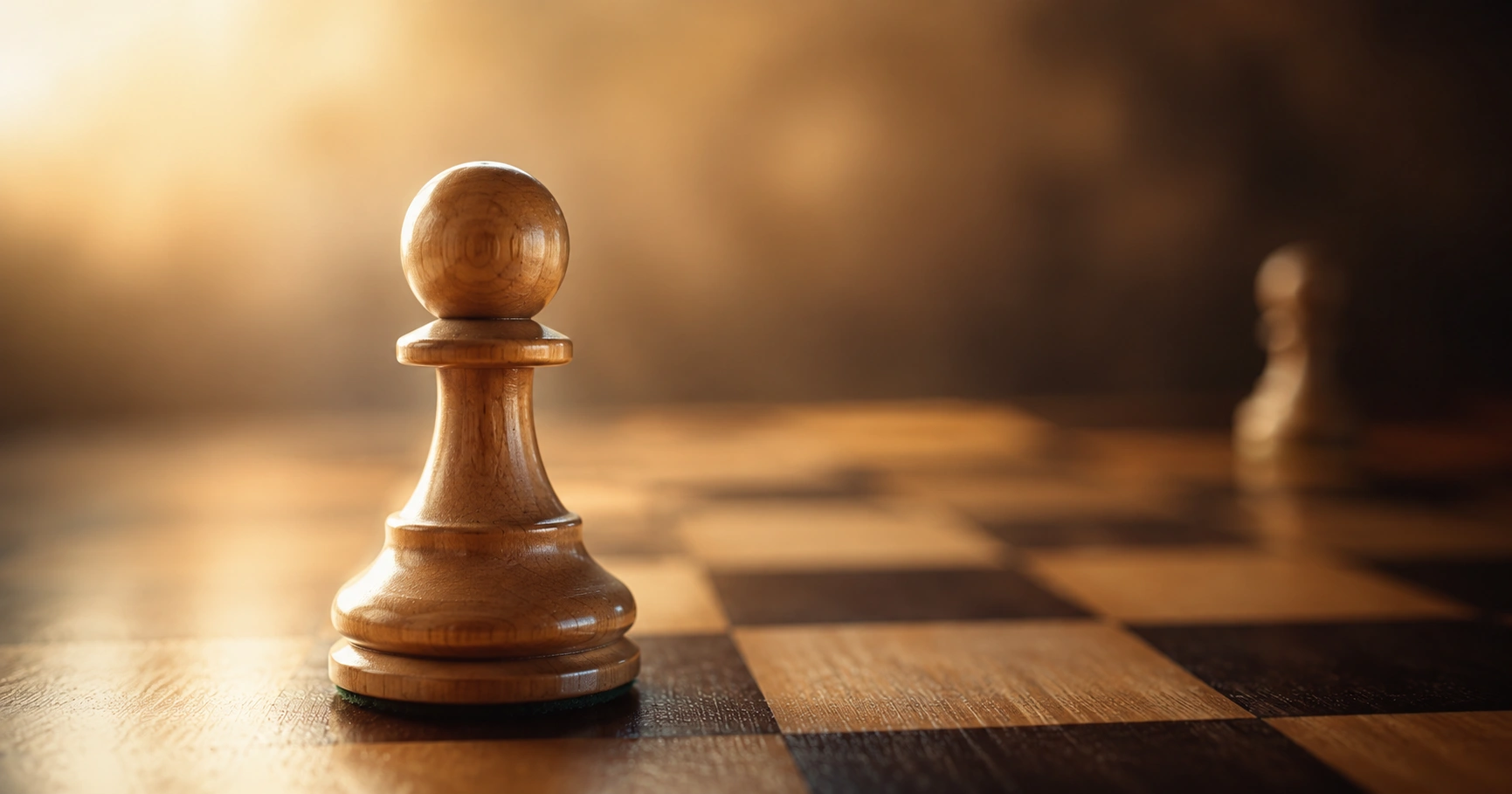
The pawn is the smallest piece on the chessboard, but its role can change the whole game. It builds structure, teaches patience and shows how small decisions can have big consequences.
 The Meaning of the Pawn in Chess
 The pawn is the smallest piece on the chessboard, but its role can change the whole game. It builds structure, teaches patience and shows how small decisions can have big consequences.
A small piece with a big role
The pawn is the smallest and most numerous piece on the chessboard. At the start of the game each player has eight pawns, so it is easy to treat them as ordinary, secondary or less important. In reality, the pawn has a very large meaning. Pawns create the structure of the position, limit the opponent, open lines for other pieces and often decide who gains the advantage.
The pawn teaches one of the most important lessons in chess: a small move can have big consequences. Once a pawn moves, it cannot go back. Every pawn move leaves a lasting mark on the board. In this sense, the pawn is a symbol of patience, planning and responsibility for your choices.
Why is the pawn so important?
The pawn moves slowly and only forward, but its influence on the game is very large. Pawns set borders, build the centre and decide where pieces can move freely. A good pawn structure can give the king safety, the pieces activity and the whole position stability.
A weak pawn structure can become a long-term problem. Isolated pawns, doubled pawns or pawns left without support often become targets. That is why chess is not only about pushing pawns forward. It is important to understand what each pawn move changes in the whole position.
The pawn is simple in movement but deep in meaning. A beginner may see only a small piece. A more experienced player sees a plan, space, weaknesses, future breaks and the possibility of promotion.
The pawn as the beginning of a journey
At the beginning of the game, the pawns stand in front of all the other pieces. They often make the first moves and open the way for bishops, the queen and the rest of the army. The pawn begins the game not because it is the strongest, but because it creates conditions for others.
In this way, the pawn is like the first step in learning chess. It does not need to look spectacular to be important. A pawn move can open the centre, prepare piece development or start an attacking plan. It can also weaken the king, give away an important square or create a gap that cannot easily be repaired later.
That is why the pawn teaches patience. Not every move has to attack immediately. Sometimes the most important move is a quiet step that prepares something larger.
A pawn cannot move backward
One of the most symbolic features of the pawn is that it moves only forward. Other pieces can return, manoeuvre and improve their position. The pawn cannot. Once it takes a step, the change is permanent.
This rule has practical importance. A pawn move can weaken a square, open a file, block your own piece or give the opponent a new target. Pawn moves should therefore be considered carefully. Pawns near the king, central pawns and pawns that may create permanent weaknesses are especially important.
Here the pawn shows its depth. Although it is the smallest piece, it requires responsibility. A good player does not move pawns randomly. The right question is: what does this move give now, and what will it change several moves later?
Pawn promotion — hidden potential
The greatest power of the pawn appears when it reaches the last rank. Then it can promote, most often to a queen. This special rule means that even the smallest piece can become one of the strongest.
Pawn promotion is one of the most beautiful ideas in chess. It shows that the value of a piece is not only about its starting position. The pawn begins modestly, but if it survives, receives support and is guided well, it can decide the result of the game.
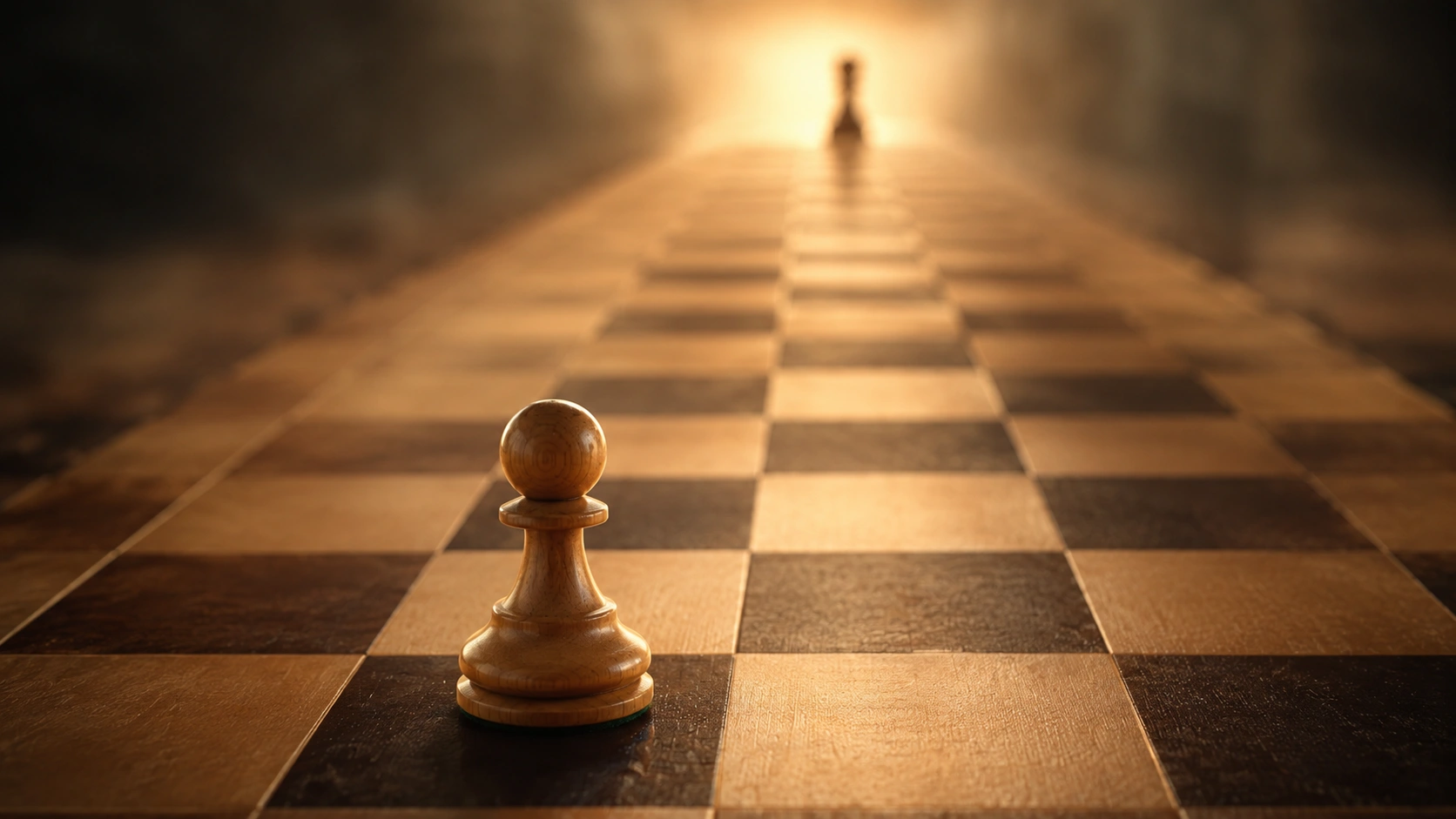
The pawn’s path to promotion
Consistency step by step
Promotion teaches consistency. A pawn does not cross the whole board in one move. It goes step by step. Sometimes it needs the support of the king, a rook or a bishop. Sometimes it must pass a blockade. Sometimes another pawn is sacrificed so that this one can move forward.
This is a useful lesson for every chess player. In chess, an advantage often grows slowly. One better pawn, one active square, one weakness in the opponent’s position — these small elements can become a winning plan.
Pawn structure and planning
Pawns are the skeleton of the position. They show where the centre is stable, where lines can open and where pieces may have good or bad squares. A strong pawn chain can support an attack. A weak pawn can become a target. A passed pawn can force the opponent to defend for many moves.
This is why the meaning of the pawn is not limited to the rules of movement. A pawn can protect a piece, restrict a knight, open a diagonal for a bishop or give the king a safe shelter. It can also close a position and change the type of plan both players should choose.
For beginners, this is one of the first steps toward strategic thinking. Instead of asking only what a pawn attacks, ask what it controls, what it weakens and what it prepares.
The pawn in the endgame
In the opening and middlegame, pawns often support other pieces. In the endgame, a pawn can become the main hero of the game. When fewer pieces remain on the board, every pawn move becomes more visible and more important.
Pawn endings show the real value of small decisions. One move too far, one poor king position or one unprotected pawn can decide the result. This is why learning pawn endings is one of the best ways to understand chess.
In the endgame, the pawn is no longer only part of a larger structure. Very often, it becomes the central story of the position.
Connection with the Chesswood Edu pawn lesson
This article explains the meaning, role and symbolism of the pawn. If you first want to learn the basic rules, go to the Chesswood Edu pawn lesson.
There you can learn how the pawn moves, how it captures, when it can move two squares and why promotion is such an important rule.
Connection with pawn tactics
When you understand the meaning of the pawn, you can look at how it works in tactical positions. Pawns can open lines, create threats, support attacks and become dangerous passed pawns.
Pawn tactics show the practical side of this small piece. They help beginners see that a pawn is not only a rule to remember, but also an active part of the plan.
Summary
The pawn is the smallest piece in chess, but its meaning is enormous. It builds the structure of the position, controls squares, opens the way for pieces, protects the king and can promote to a stronger piece. It teaches patience, consistency and responsibility for decisions.
The main message of the pawn is simple: in chess, small steps matter. A pawn may look modest, but when it is guided well, it can change the whole game.


Test: the meaning of the pawn in chess
Automatic testChoose the answers as in Chesswood Edu lesson tests. The correct answers stay hidden until you decide to show the answer key.
This test checks the meaning of the pawn, not only the movement rules.
A. Meaning and role of the pawn
Check whether you understand why a pawn matters beyond its material value.
B. Pawn decisions
Remember: a pawn moves only forward, so pawn decisions are lasting decisions.
C. Structure and endgames
This part checks how pawns shape the area of the fight.
D. Pawn promotion
Promotion shows the hidden potential of the pawn.
Export ready
This export prepares only the current section: the test about the meaning of the pawn in chess.
FAQ
Why is the pawn important in chess?
The pawn is important because it creates the structure of the position, controls squares, protects pieces and can promote when it reaches the last rank.
Is the pawn the weakest piece?
In starting value, the pawn is the least valuable piece, but its strategic meaning can be very large. In the endgame, a single pawn can decide the result.
Can a pawn move backward?
No. A pawn only moves forward. This makes every pawn move a lasting decision.
What can a pawn promote to?
When a pawn reaches the last rank, it can promote to a queen, rook, bishop or knight. The queen is the most common choice.
What does the pawn symbolize in chess?
The pawn symbolizes patience, consistency, growth and hidden potential. It shows that even a small piece can have great meaning.
Do you want to understand chess basics better?
Explore more Chesswood Edu materials and see how every piece influences the game.