King Meaning in Chess
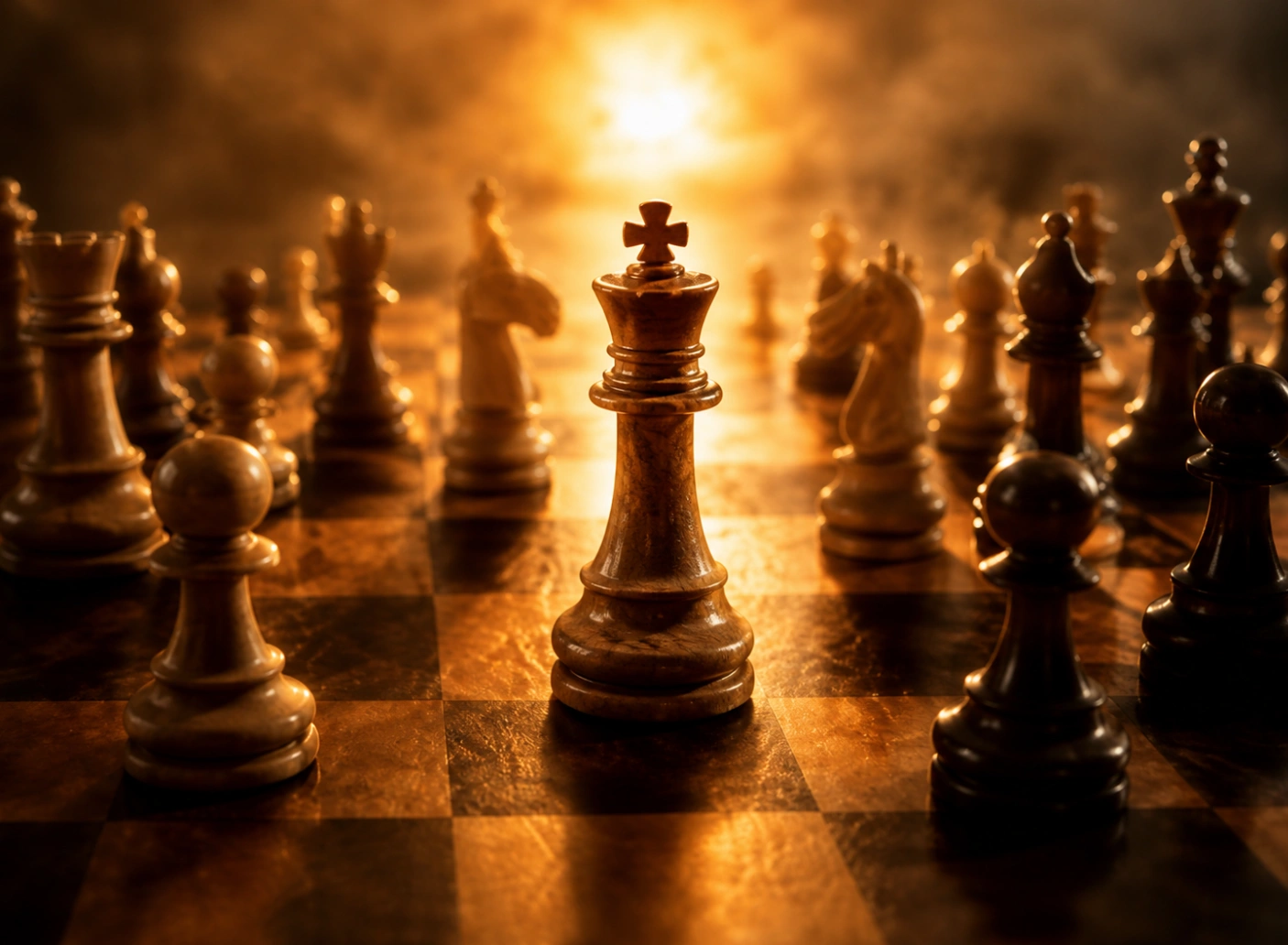
The king is the most important piece in chess, even though he is not the strongest piece. His meaning comes from the fact that the whole game revolves around his safety, protection and activity at the right moment.
 King Meaning in Chess
 The king is the most important piece in chess, even though he is not the strongest piece. His meaning comes from the fact that the whole game revolves around his safety, protection and activity at the right moment.
The most important piece in the game
The king is the piece around which the whole meaning of a chess game is built. He does not have the greatest range, he does not win material as quickly as the queen, and he cannot cross the board in one move. Still, his fate decides the result.
The meaning of the king is that every decision on the board must take his safety into account. You can have extra material, active pieces and strong pawns, but if your own king is left without protection, the entire position can collapse.
The king teaches that in chess the most important piece is not always the strongest one.
Why is the king unique?
The king is unique because of the goal of the game. Other pieces can be exchanged, sacrificed or sometimes deliberately given up for an attack, initiative or endgame advantage. The king cannot be treated this way, because the game ends when he cannot be defended from checkmate.
This makes the king both the center of defense and the main target of the opponent. Every attacking plan, pawn structure and decision to open a file can be judged by one question: is my king safe, and is the opponent’s king vulnerable to pressure?
For a beginner, this is an important lesson. Chess is not just a collection of flashy moves. It is a game of responsibility for the whole position.
The meaning of the king in the opening
In the opening, the king usually needs quick attention to safety. Developing pieces, controlling the center and castling are not separate ideas, but parts of one decision: how to build a position where the king will not become an easy target.
Beginners often see the opening as a race to develop pieces or attack pawns. The king shows that development without safety can be misleading. When the center opens and the king remains in an uncertain place, the opponent can gain the initiative even without a large material advantage.
That is why the king’s meaning in the opening is connected with creating conditions for the rest of the game. A safe king allows you to plan, develop pieces and make decisions without constantly dealing with threats.
The king in the middlegame
In the middlegame, the king often becomes the center of position evaluation. An attack on the king can change the value of pieces, pawns and tempi. A piece placed near the opponent’s king may matter more than a stronger piece that remains passive.
King safety depends on many elements: pawn structure, control of key squares, available defenders, open files, diagonals and whether the opponent can bring more pieces into the attack.
Good middlegame play requires balance. You need to know how to attack the opponent’s king, but you must not forget your own. An attack without a secure position can turn against the player who started too one-sidedly.
The king in the endgame
In the endgame, the meaning of the king changes. When fewer pieces remain on the board, the king no longer has to hide all the time. He can become an active participant in the fight for squares, pawns and winning chances.
An active king can stop a pawn, support his own pawn, enter the center or restrict the opposing king. In many endgames, king activity decides whether an advantage can be converted into a result.
This change teaches an important rule: safety does not mean passivity. The right moment decides whether the king should remain protected or step into the game as an active piece.
The king as a symbol of safety
The king symbolizes safety because his position influences every other decision. When the king is well protected, pieces can act more actively, pawns can support a plan and the player can choose between attack, defense and improving the position.
When the king is exposed, even good pieces may be forced into passive defense. The opponent does not need to give checkmate immediately. It is often enough to create threats, force concessions and make the defenders perform uncomfortable tasks.
The king therefore shows that safety is not an addition to the plan. It is part of the plan from the first moves to the endgame.
The king as a target of attack
An attack on the king is one of the most important chess themes because threats against the king have special force. A check, a mate threat, an opened file or weakened squares around the king can demand a response faster than an ordinary attack on material.
A good king attack usually does not rely on one move. It grows from piece coordination, open lines, weaknesses and limited escape squares. Sometimes the most important attacking move is not a check, but a move that removes a defender.
For a student, this is a valuable clue: an attack on the king should be prepared. Flashy checks are rarely enough if they do not lead to a concrete weakness or checkmate.
King defense and piece coordination
Defending the king is not only about keeping pawns in front of him. Piece coordination, control of entry squares, the ability to exchange active attacking pieces and avoiding unnecessary weaknesses around the king are all important.
Sometimes the best defense is activity. A piece that attacks an important square or forces the opponent to react can defend the king more effectively than a piece that stands passively next to him. Defense and counterplay are often connected.
The king teaches that a good position is not only about the number of pieces on the board. What matters is whether the pieces work together and whether each of them helps protect the most important point in the position.
Castling as a safety decision
Castling is one of the clearest examples of a decision connected with king safety. It is not only a technical move, but a choice about where the king will be protected and how the rook will be brought closer to activity.
In many games, early castling helps organize the position. The king leaves the center, the rook comes closer to active play, and the player can move into a middlegame plan. However, castling alone does not solve everything if the squares around the king become weak.
That is why castling should be understood strategically. The question is not only: can I castle? The more important question is: will my king really be safe after castling?
King activity in the endgame
King activity in the endgame is one of the first themes that shows the difference between knowing rules and understanding a position. The king that needed protection in the middlegame can enter the center in the endgame and fight for key squares.
An active king can support a passed pawn, block an enemy pawn, restrict the other king and help create opposition. Often, one king move changes the evaluation of the entire endgame.
This is an important message for beginners: the king is not a permanently passive piece. His role depends on the stage of the game, the number of pieces and the level of danger.
What does the king teach beginners?
The king teaches responsibility. Every pawn weakness, every rushed attack and every neglected development move can have consequences for the safety of the whole position.
He teaches planning. A good plan cannot ignore the king, because even an active attack requires an answer to the question of whether your own position can be opened by counterplay.
He teaches patience. In the opening and middlegame, the king often needs protection, but in the endgame he must enter the game. A beginner learns to recognize the moment when the same piece changes its task.
He also teaches respect for consequences. One careless pawn move near the king can create a weakness that the opponent may use for many moves.
The most common mistake in understanding the king
The most common mistake is thinking that the king matters only because he cannot be lost. That is too narrow. The king affects the plan, tempo, pawn structure, piece activity and the side of the board where it makes sense to play.
A second mistake is ignoring your own king safety during an attack. A beginner may see only threats against the opponent, but miss the fact that their own king stands on open lines or has weakened squares around him.
A third mistake is keeping the king passive in the endgame. When there are fewer threats, the king should help in the fight. A king that stays too passive can turn a winning endgame into a draw or make defense harder.
Connection with the Chesswood Edu king lesson
This article explains the meaning of the king: his symbolism, safety, responsibility, role in planning and activity in the endgame. If you want to organize the basic movement rules first, go to the Chesswood Edu king lesson.
The lesson explains the basic rules of the king. The article you are reading now goes further: it helps you understand why the entire game is shaped by the safety and role of this piece.
Connection with king tactics
Once you understand the meaning of the king, it is useful to study practical motifs connected with attack, defense, checkmate, escape squares, weakened squares and piece coordination around the most important target in the game.
This is the natural next step: first you understand the king’s role, then you practice situations in which king safety or king activity directly affects the result of the game.
Summary
The king is the most important piece in chess, even though his movement is limited. The whole game revolves around whether your own king is safe and whether the opponent’s king can be attacked.
In the opening, the king needs protection and an organized position. In the middlegame, he becomes the center of attacking and defensive plans. In the endgame, he can become an active piece that helps fight for squares, pawns and the result.
The king shows that every decision in a game must consider safety, planning and consequences for the whole position.

Test: king meaning in chess
Automatic testThis test checks the meaning of the king, his symbolism, safety, responsibility, endgame activity, attack, defense and piece coordination.
Choose one answer for each question. Correct answers are not visible before checking.
A. Meaning and symbolism of the king
Focus on the goal of the game, responsibility and the difference between power and meaning.
B. Safety, defense and responsibility
King safety influences the evaluation of the whole position.
C. The king in the opening, middlegame and endgame
The king’s role changes depending on the stage of the game.
D. Tactics, activity and coordination around the king
Attack and defense around the king depend on piece coordination, squares and pawn structure.
Selected section export is ready
This export will prepare only the current section: the test about king meaning in chess.
FAQ
Why is the king the most important piece in chess?
The king is the most important piece because the goal of the game is to checkmate the opponent’s king and protect your own king. Even a large material advantage does not matter if the king is defenseless.
What does the king symbolize in chess?
The king symbolizes the goal, safety, responsibility and the consequences of decisions. He shows that the whole position must also be judged through the safety of the most important piece.
Why should the king be protected in the opening?
In the opening, the king is often exposed to quick attacks if the center is open or the pieces are not developed. That is why players care about development, castling and a coherent defense.
Can the king be active?
Yes. In the endgame, the king often becomes an active piece. He can support pawns, control important squares, help with defense and take part in converting an advantage into a result.
What is the most common beginner mistake connected with the king?
The most common mistake is underestimating king safety: weakening squares around the king, delaying castling without a reason or starting an attack without securing your own position.
Want to understand the king better?
Start with the Chesswood Edu king lesson, then move to king tactics and see how safety, defense, endgame activity and attacks on the king influence the result of a game.